The MOVA P70 Pro Ultra is well equipped at a reasonable price: high suction power, strong mopping performance, and a fully automatic station – We checked its strengths and weaknesses in everyday use and tested all functions in detail.
The MOVA P70 Pro Ultra comes with features that, just a few months ago, were clearly reserved for the upper class. Up to 30,000 Pa suction power, a swiveling mop aka RoboSwing™, an extendable side brush, and an almost fully automatic cleaning station initially read like the ingredients of an expensive flagship robot vacuum.
On paper, the P70 Pro Ultra is surprisingly complete. Still, with robot vacuums it repeatedly becomes clear that high performance figures alone do not make a good household helper. What matters in everyday life above all are navigation, obstacle detection, actual cleaning performance, and reliability.
This is exactly where the MOVA gets interesting. Previous tests attest to exceptionally strong cleaning performance and an excellently equipped station, but at the same time report minor weaknesses in navigation and detail work.
That is why we are taking a closer look at where the P70 Pro Ultra really performs at flagship level – and where MOVA had to make compromises for the lower price. Stay tuned…
[asin="B0GVV2SRGV",type="standard"]
[toc]
Design and base station: largely automated
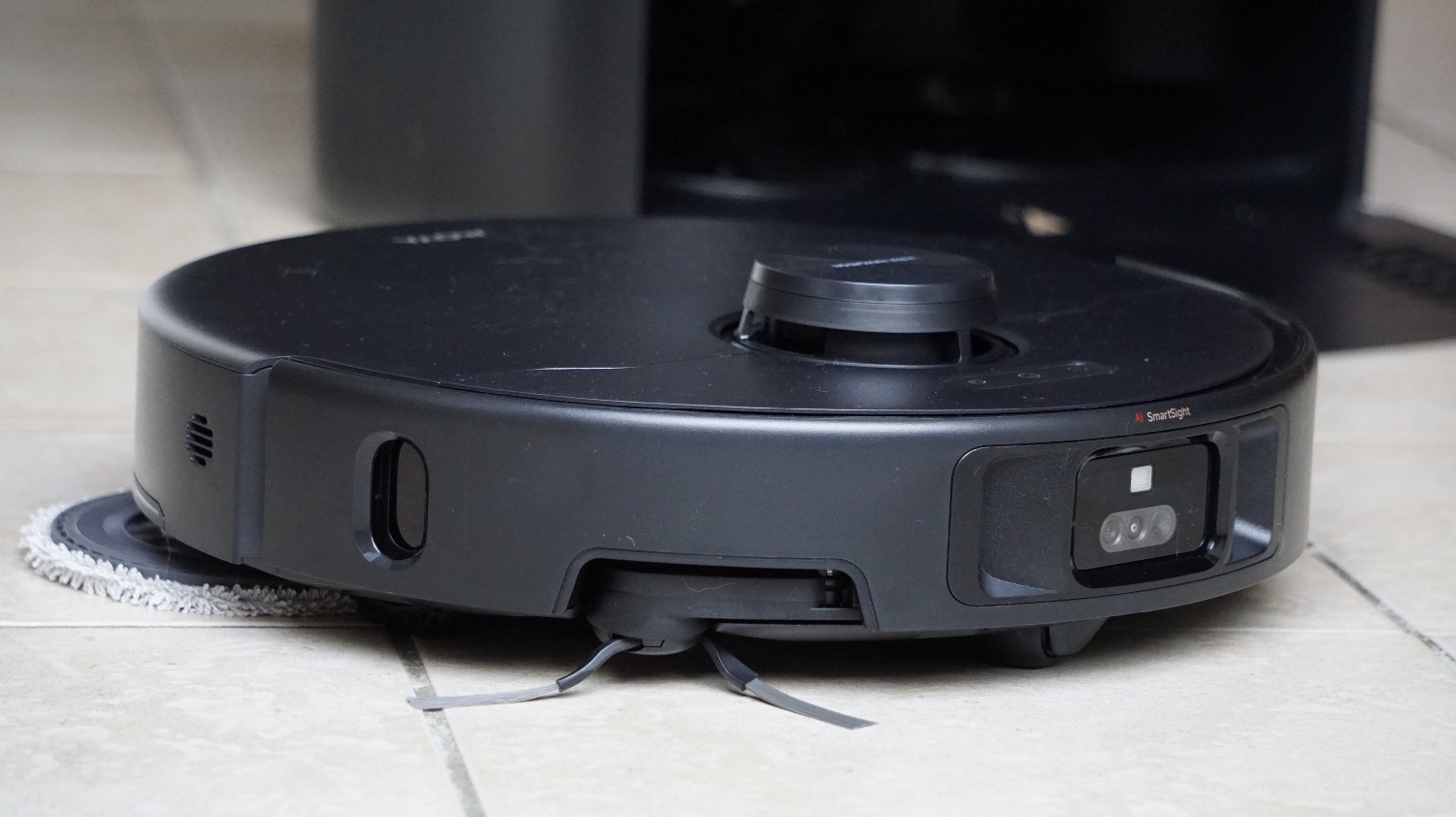
Visually, the MOVA P70 Pro Ultra creates a subtly modern impression. The matte black surface, the brushed cover on the base station – all of this makes the robot vacuum look stylish and pleasantly unobtrusive in the home.
Tip: If you have pets with white fur at home or are looking for something a little less sensitive to dust, you should go for the white version of the P70 Pro Ultra instead!
[asin="B0H831XSBV",type="standard"]
The robot measures 350 × 350 × 103.8 mm, which puts it in the usual size range of current premium robot vacuums, with one difference. Due to the permanently installed LiDAR tower, it is a bit taller than models with a retractable sensor unit. Under very low furniture, this can become a dealbreaker – so you should keep the nearly 10.4 centimeters of height in mind before buying.

On the underside, it becomes clear where MOVA places its focus. In addition to the main brush, there is an extendable side brush and two rotating mop pads. The side brush can be raised by up to 9 mm, and the mops by 10.5 mm. In addition, the right mop can extend sideways via RoboSwing™ to clean closer along baseboards and furniture edges.
The base station is also exciting. At 420 × 458 × 470 mm, it requires noticeably more floor space than a simple charging station, but in return it automatically takes over a large part of the maintenance work.

Inside are a 4-liter fresh water tank and a 3.5-liter waste water tank. After cleaning, the station empties the dustbin, washes the mop pads with very hot water, then dries them, and automatically doses cleaning solution if needed. The mops can also be left behind in the station automatically for vacuum-only runs – a useful feature especially with larger carpeted areas, to avoid unnecessarily dirtying the carpets.
Thanks to the station, the manual effort in everyday use is surprisingly low. Refilling water, emptying waste water, occasionally cleaning the washing area, and replacing consumables are still necessary, but compared with simpler systems, the station takes a large part of the routine work off the user’s hands.
There are some small compromises in the scope of delivery, which includes only a few replacement consumables. Additional dust bags or replacement pads would definitely have been welcome.
All in all, the overall package feels well rounded: The robot itself remains functional and compact enough, while the large station is consistently designed for convenience and as little manual work as possible.
Cleaning performance: strong vacuuming, solid mopping
The cleaning performance is clearly one of the MOVA P70 Pro Ultra’s biggest strengths. The technical data alone make a statement with a maximum of 30,000 Pa suction power. More important than the pure number, however, is how much dirt is actually picked up in the end – and this is exactly where the P70 Pro Ultra delivers a convincing performance in our test.
Very strong suction performance on hard floors
On tiles and other hard floors, the P70 shows hardly any weaknesses. Both fine dust and coarser particles were picked up reliably in the test. With oat flakes on tiles, it achieves a pickup rate of around 95 percent. The P70 also handles other everyday crumb challenges very thoroughly.
On carpet, performance drops somewhat more noticeably. In the test, around 83 percent of the oat flakes and 81 percent of the sand ended up in the dustbin. That is still a good result, but at the same time it shows that pure suction power depends heavily on the underlying surface.
Test category | Measured dirt pickup |
|---|---|
Oat flakes on tiles | approx. 95 % |
Oat flakes on carpet | approx. 83 % |
Sand on carpet | approx. 81 % |
[topdeals]
That makes the P70 Pro Ultra especially interesting for households with mostly hard flooring. On the other hand, if you have a lot of thick carpets, you still get good cleaning performance, but you should not expect miracles from the 30,000 Pa.


One small weak point appears with long hair. MOVA includes a relatively classic rubber brush roller as standard. Unlike dual rollers or rubber rollers with a cutting function, long hair can occasionally wrap around the brush here. For households with long-haired residents or pets, the optionally available cutting brush may therefore be worthwhile.
Rotating mops with decent pressure
For mopping, MOVA uses two rotating mop pads that operate at up to 260 revolutions per minute. Added to this is a high contact pressure of 12 newtons, which is common today among many vacuum-mop robots. This ensures that the robot does not simply pass over dirt with a damp cloth, but mechanically works on it.
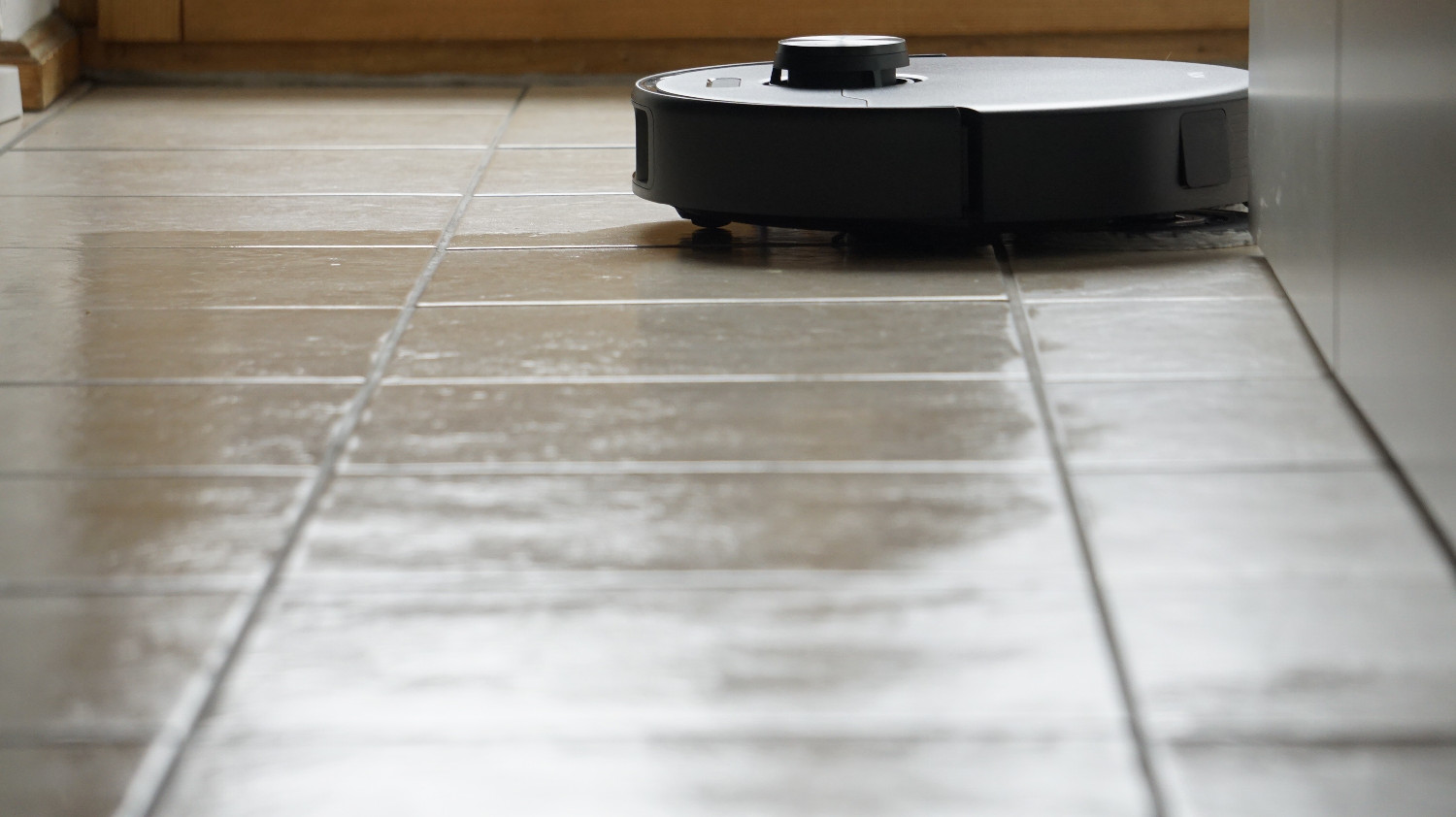
In everyday use, this works well. Fresh stains, dust, and light soiling are removed reliably. However, when it comes to dried-on stains, previous test results differ. While some tests observed good results even with coffee, others report that stubborn dirt requires multiple passes or that slight streaks remain. That matches my observations. The P70 Ultra is well equipped with these mops. By nature, however, they have certain limitations, especially the tendency to smear stains, which cleaning rollers such as those on the MOVA S70 Pro Ultra handle better. Nevertheless, the P70’s mops are nicely fluffy and therefore satisfactorily reach all areas even on uneven floors in the test, as the following image shows.

Edge cleaning with RoboSwing and extendable side brush
For edge areas, MOVA uses two additional techniques. As already mentioned above, the side brush can be extended, and the right mop also swings far outward with RoboSwing™. This allows the P70 to reach areas that often remain uncleaned with classic round robot vacuums.
In practice, this works really well overall. Around table legs and in corners, the P70 does a good job, and only rarely do small amounts remain along the baseboards.
MOVA also takes carpets into account during mopping. The mops can be raised by 10.5 mm. Even more practical: for vacuum-only runs, the robot can even leave the mop pads completely in the station. Especially in apartments with larger and light-colored carpeted areas, this prevents damp mops from being unnecessarily dragged over the carpet.
Overall, the cleaning performance is clearly one of the strongest arguments in favor of the P70 Pro Ultra. On hard floors, it vacuums very thoroughly, the mopping function goes well beyond simple damp wiping, and the extendable cleaning elements help along edges. Small limitations remain with carpets, long hair, and very stubborn stains – but considering the overall package, these are more fine details than fundamental weaknesses. Put pragmatically: when I come home, the floor looks clean – period.

Navigation and obstacles: good orientation with small hiccups
When it comes to navigation, the MOVA P70 Pro Ultra leaves a somewhat more mixed impression than it does with cleaning performance. The mapping itself worked quickly and reliably in the test. Rooms were recorded cleanly, and areas could then be split, merged, or marked with no-go zones in the app.

During the actual cleaning, the robot usually moved through the rooms systematically and in a comprehensible way. In individual situations, the P70 Pro Ultra stopped briefly and took unusual paths or went over already cleaned areas again. However, such hiccups were rare. Further updates are to be hoped for here.
It is also important to distinguish between navigation and obstacle detection. Because although the route planning occasionally seemed a little quirky, the MOVA reliably detects many objects thanks to AI-based "SmartSight". Shoes, toys, or larger objects were generally recognized in good time and avoided.
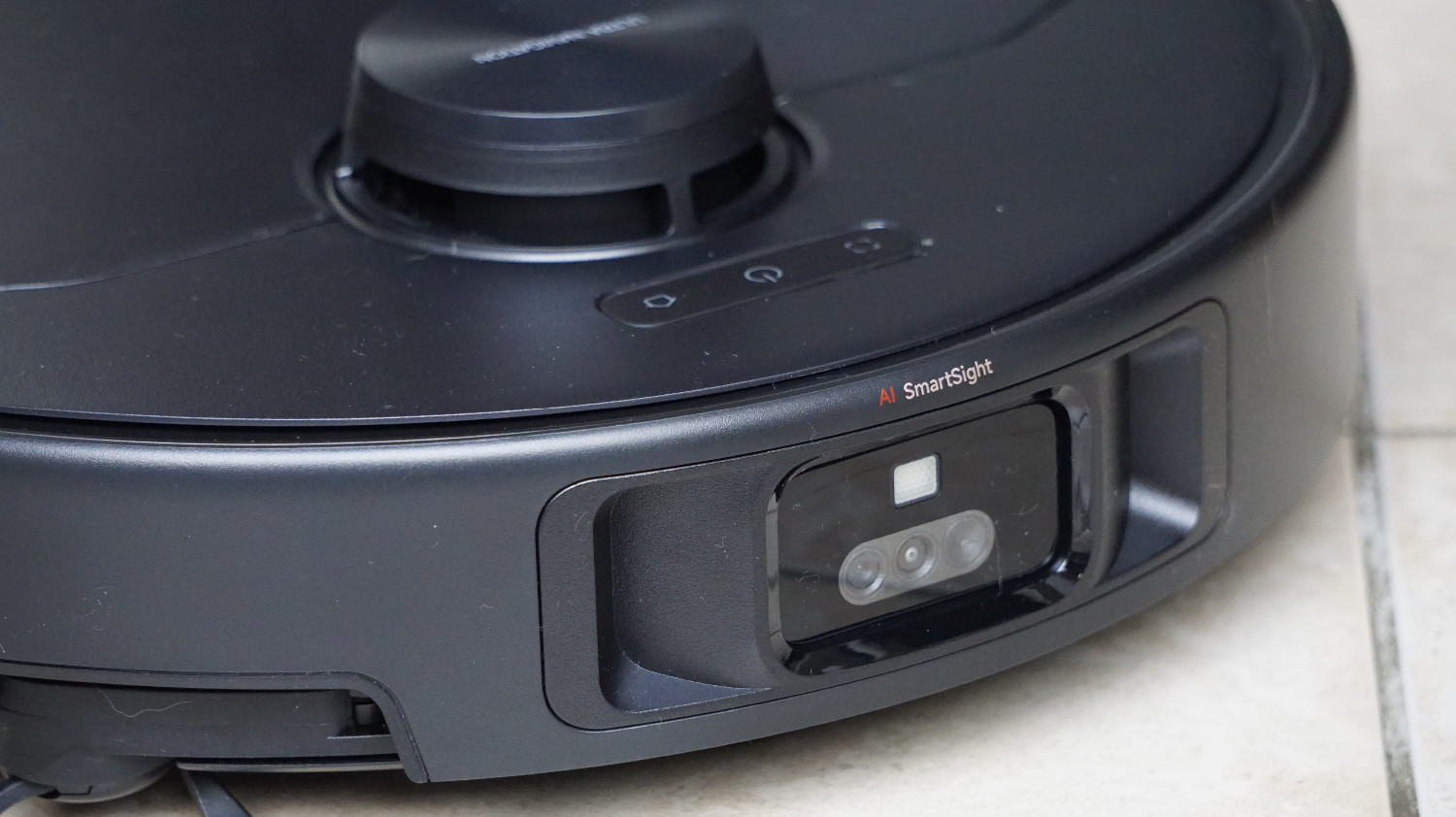

It was more difficult for the P70 with very small or flat obstacles. Cables, thin objects, or individual socks may be detected late depending on their position, or even run over. Others I had the impression that this became less frequent over time, possibly due to updates or AI training. Ultimately, the following applies: if you often leave small objects lying on the floor, you should tidy up a bit before the first unsupervised run.
A clear technical limit appears with door thresholds. According to the manufacturer, the robot can overcome obstacles up to 22 mm high. That is sufficient without problems for normal transition rails and flat thresholds. In older buildings or houses with higher wooden thresholds, however, this limit can quickly be reached. Unlike some current premium models, the P70 Pro Ultra does not have an actively liftable chassis. It does, however, have a threshold mode in which it basically "shoots" over the threshold with a bit of a run-up and more momentum. This works well; you just need to make sure there is no stair drop directly behind the threshold.
Height also plays a role in everyday use. At 10.38 cm, the MOVA is not unusually tall, but due to the fixed LiDAR tower it will not fit under every sofa or sideboard. If you have low furniture, you should therefore measure beforehand.
On the positive side, the robot reliably finds its way back to the station after interruptions and then continues its work. Even larger living areas generally do not pose a problem for its orientation.
Overall, the navigation is therefore good, but not quite at flagship level. The mapping is convincing, larger obstacles are usually recognized safely, and cleaning is performed in a mostly structured way. However, small hiccups in route planning and the limited threshold height show where MOVA has left some room to the premium models such as the V70 Ultra Complete.
MOVAhome app: lots of possibilities
The P70 Pro Ultra is controlled via the MOVAhome app. Setup and initial mapping are usually quick and easy in tests: connect the robot to Wi-Fi, let it scan the rooms, and then adjust the map. Areas can be split, combined, or equipped with no-go zones and virtual walls. Below you will find a few impressions from the app:


The setting options for the actual cleaning are especially extensive. For individual rooms, among other things, suction power, water volume, and cleaning intensity can be defined individually. The order of the rooms or multiple passes are also possible.
Function | Options |
|---|---|
Room cleaning | select individual rooms or areas |
Suction power | adjust depending on room and floor type |
Mopping | set water amount and intensity |
Maps | split, merge, and name rooms |
No-go zones | virtual walls and no-go areas |
Automation | schedules and recurring cleaning |
This makes the P70 Pro Ultra especially suitable for apartments and houses with different floor coverings. Carpets can be treated differently than tiles or parquet, while more intensive cleaning can be stored for particularly heavily used rooms.
It is also practical that the robot can not only lift its mops, but can also leave them completely in the station for vacuum-only runs. Especially with larger carpeted areas, this is the royal road compared with simply lifting them.
Lots of function, a little lacking in clarity
The downside of the large functional scope: the app is a bit overloaded in places. The basic functions are quick to access, but with the many detailed options, you first have to spend some time getting familiar with it.


An additional feature is the integrated camera function. It allows the robot to also be used for remote viewing of the living space. It is positive that this function is not activated automatically, but must be deliberately enabled and secured with a PIN. It would be even better if there were a physical privacy cover built in at the front, since the robot parks facing forward with the camera, although this applies to almost all modern robot vacuums with a camera.
Overall, MOVA offers a very comprehensive app, whose range of functions fits well with the high degree of automation of the P70 Pro Ultra. Established competitors are still partly ahead when it comes to clarity and menu guidance – but the MOVA hardly lacks anything in terms of actual possibilities.
Voice control
Voice control is also part of the P70 Pro Ultra’s feature set. Via Amazon Alexa and Google Assistant, the robot can, for example, be started, paused, or sent back to the base station. Integration is done via the MOVA skill or Google Home. This is practical especially for simple commands, but it does not replace the MOVAhome app with its significantly more extensive room and cleaning settings.
Battery and maintenance: made for as little manual work as possible
With a 5,200 mAh battery, the MOVA P70 Pro Ultra is also suitable for larger living areas. In the test, it achieved a long runtime: even at higher suction power, enough reserve remains to clean larger floors in one go. In my apartment, after around 45 m² of cleaned area (~85 m² living space), there was still a good 65 percent battery capacity left.
If the energy does run low during a cleaning job, the robot automatically returns to the station, recharges, and then continues the started task. As a result, it has hardly any problems even with houses of 150 m² or with several cleaning runs in succession.
The station takes care of a large part of the upkeep
The actual comfort gain becomes apparent in maintenance, which is largely handled by the station:
Emptying the dustbin
Cleaning the mop pads with hot water
Drying the mops with warm air
Providing fresh water for the next mopping process
Automatically dosing cleaning solution
Leaving the mop pads in the station for vacuum-only runs
This means that regular maintenance is essentially reduced to refilling the 4-liter fresh water tank, emptying the 3.5-liter waste water tank, and occasionally replacing the dust bag, brushes, and filters.


Of course, the system is not entirely maintenance-free. The station’s wash tray should be checked and cleaned occasionally.
The noise level is also pleasantly moderate during normal cleaning operation. Naturally, it gets significantly louder when the base station sucks out the dustbin – but this process only takes a short time.
Overall, the low maintenance effort is one of the P70 Pro Ultra’s great everyday strengths. If you are looking for a robot vacuum that does not demand attention after every other use, you get a largely automated cleaning system here, in which water and consumables are the main remaining manual tasks.
Price-performance: where the P70 Pro Ultra cuts costs – and where it does not
The MOVA P70 Pro Ultra does not try to reach the absolute top in every discipline, but rather to achieve an especially good price-performance ratio. At the current price of €515, I think it succeeds very well! Because measured by its equipment, the P70 Pro Ultra is close to upper-class models. Features such as leaving the mop pads behind, the extendable side brush, RoboSwing™, or cleaning the mops with very hot water are by no means a given in every price class.
[asin="B0GVV2SRGV",type="standard"]
On the other hand, savings were made in areas that most households can do without anyway. For example, the LiDAR tower cannot be retracted, higher thresholds remain a limit at a maximum of 22 mm, and the standard main brush does not have an integrated hair-cutting function. More expensive competitors also still show a bit more fine-tuning in navigation. I would therefore recommend the model as follows:
Very well suited for | Less well suited for |
|---|---|
Households with lots of hard flooring | many high door thresholds |
Users who want to clean as little as possible themselves | very low furniture |
mixed surfaces of carpet and hard flooring | exclusively thick carpeted areas |
Homes with regular mopping needs | very large amounts of long hair without the additional brush |
Buyers focused on features per euro | Users expecting maximum navigation perfection |
What matters in value for money is how few relevant convenience features you have to give up compared with the upper class. And here the following applies to the P70 Pro Ultra – anyone who can live with small limitations in navigation, height, and threshold climbing gets an unusually comprehensively equipped overall package.
Conclusion: lots of upper-class quality, few painful compromises
The MOVA P70 Pro Ultra impresses above all where it matters in everyday life: in cleaning performance and convenience. On hard floors, it vacuums very thoroughly, the rotating mop pads work with decent pressure, and the base station automatically takes over a large part of the subsequent upkeep.
The overall package of 30,000 Pa suction power, extendable side brush, RoboSwing™, automatically removable mops, and the extensive cleaning station is particularly strong. In this combination, the P70 Pro Ultra offers a surprisingly large number of features that are otherwise more likely to be found in significantly more expensive models.

However, it does not come entirely without compromises. Navigation seems less refined in places than with the best models from Roborock or Dreame, the maximum threshold height of 22 mm can become problematic in older houses, and the fixed height of 103.8 mm should also be taken into account with low furniture. With very long hair, the optional cutting brush may also make sense.
very strong suction power on hard floors
powerful mopping system with 260 rpm and 12 N contact pressure
extendable side brush and RoboSwing™
Mops can be completely removed for vacuum-only runs
extensive, largely self-cleaning base station
large water tanks with 4.0 / 3.5 liters
many app and automation functions
overall strong price-performance ratio
Navigation not always quite as confident as the top class
only 22 mm threshold climbing
fixed LiDAR tower limits clearance height
standard main brush may require maintenance with long hair
app somewhat cluttered in places
All in all, the P70 Pro Ultra is therefore not an uncompromising flagship, but a very convincing all-rounder with an unusual amount of equipment for the money. If you primarily value strong cleaning, good mopping, and as little manual work as possible, you will find one of the more interesting overall packages in its price class here.
S70 Ultra Roller or P70 Pro Ultra?
Anyone looking around at MOVA in the price range of around 600 to 700 euros will almost inevitably also come across the P70 Pro Ultra. On the spec sheet, both models are surprisingly close to each other: the P70 Pro Ultra is rated at 30,000 Pa, while the S70 Ultra Roller is rated at 32,000 Pa. From my point of view, however, this comparison is decided less by pure suction power than by the question of how important good mopping really is in everyday life.

This is exactly where the concepts diverge. The P70 Pro Ultra works with the familiar system of two rotating mops, while the S70 Ultra Roller relies on a 27-centimeter-wide HydroForce roller. At first, that sounds like a technical detail, but in practice it makes a noticeable difference.
Feature | P70 Pro Ultra | S70 Ultra Roller |
|---|---|---|
Max. suction power | 30,000 Pa | 32,000 Pa |
Mopping system | Two rotating mops | 27-cm HydroForce roller |
Mopping motion | 260 rpm, 12 N | Continuous roller, 17 N |
Fresh water during mopping | No | Yes |
Dirty water pickup while driving | No | Yes |
Carpet protection | Lift or remove mops | 12-mm lift + AutoShield |
Battery | 5,200 mAh | 6,400 mAh |
Height | 103.8 mm | 91.5 mm |
Threshold climbing | 22 mm | Up to 30 mm single-step |
Fresh/waste water tank | 4.0 / 3.5 l | 5.0 / 4.5 l |
Current offers |
The P70 Pro Ultra is the more classic candidate. Its mops rotate at up to 260 revolutions per minute and press onto the floor with 12 N. In my experience, that is easily sufficient for everyday dirt on hard floors. This system also has a practical advantage: if only vacuuming is needed, the robot can leave the mops in the station. In everyday use, that is pleasantly uncomplicated.
The S70 Ultra Roller takes a much more consistent approach to mopping. The roller is continuously moistened with fresh water while driving, scraped off at the same time, and the dirty water is directly picked up again. Especially on larger areas or more heavily used hard floors, this principle seems more convincing to me because the same mop surface is not dragged through the room getting dirtier and dirtier. This is one of the rare cases in which a different mopping system not only looks more modern on paper, but can also be justified objectively.
If vacuuming is the main task, both models are closer together than their different technology would suggest. If mopping is important, the S70 Ultra Roller has the clearer advantage.
Even aside from the roller, the S70 is the more modern device. At 91.5 millimeters, it is significantly flatter than the P70 Pro Ultra at 103.8 millimeters, which can definitely matter under low furniture. In addition, there is the larger 6,400 mAh battery, higher thresholds with StepPro 2.0, and the more refined carpet management. Compared with that, the P70 Pro Ultra remains more of a solid all-rounder that gets many things right in daily cleaning, but is not quite as specialized for strong mopping performance.
The P70 Pro Ultra still remains interesting. Especially if mopping is not your top priority and the model is available at a noticeably lower price in retail. Its suction performance and general everyday usability are closer to the S70 than one might initially expect based on the technical differences. So if your main focus is dust, hair, and normal everyday apartment life, you still get a very sensible package here.
All in all, the choice is fairly clear from my point of view: the P70 Pro Ultra is the classic, well-equipped all-rounder with a strong station and proven technology. The S70 Ultra Roller justifies the extra cost primarily through its more sophisticated and ultimately stronger mopping system, flatter design, and more modern technology for carpets and obstacles.
Further details on the models can be found directly at MOVA: [url="https://de.mova.tech/products/saugroboter-p70-pro-ultra",name="P70 Pro Ultra bei MOVA",title="Diese Seite führt zum P70 Pro Ultra bei MOVA"] and [url="https://de.mova.tech/products/s70-ultra-roller-saugroboter-schwarz",name="S70 Ultra Roller bei MOVA",title="Diese Seite führt zum S70 Ultra Roller bei MOVA"]

