Bosch GBH or GSB? Explore the key differences and suitable models to find the right tool for concrete, masonry, and screwdriving.
Bosch GBH vs. GSB: Which Tool Do You Really Need?
My short verdict is simple: choose a GBH for drilling holes in concrete. If you mainly want one tool for screwdriving, wood, metal, and occasional holes in masonry, a cordless GSB is the more versatile choice. In my view, the real decision has less to do with a higher watt rating or impact figure and far more to do with what you actually do on site or at home.

One point is easy to miss when you compare Bosch model names: GBH stands for Bosch rotary hammers, while GSB covers both cordless combi drills and corded impact drills. So a GSB is not automatically a cordless screwdriver.
If concrete is the job, the GBH is usually the right answer. If versatility is the priority, the GSB often makes more sense.
The key difference at a glance
Decisive difference | Bosch GSB | Bosch GBH |
|---|---|---|
Impact mechanism | Mechanical impact; needs more user pressure | Pneumatic hammer mechanism; built for hard materials such as concrete |
Tool holder | Usually a drill chuck for cylindrical shanks | SDS plus or SDS max; requires matching bits |
Screwdriving | Cordless GSB models with torque settings work well as everyday tools | Not the first choice for regular screwdriving |
Chiseling, for example removing tiles | No chiseling function | Possible if the model includes a dedicated chiseling mode |
The basis for this comparison comes from Bosch explanations and product documentation.
Practical rule: a GSB is the more universal drill-driver, while a GBH is the specialist for concrete and, depending on the model, light chiseling work.
Your decision in three typical situations
You want your first tool for screwdriving, wood, metal, and occasional masonry: choose a cordless GSB.
You already own a drill-driver and now need to drill into concrete: add a GBH.
You also want to remove tiles or chip off plaster: choose a GBH with an explicitly stated chiseling mode.
Two examples that make the difference tangible
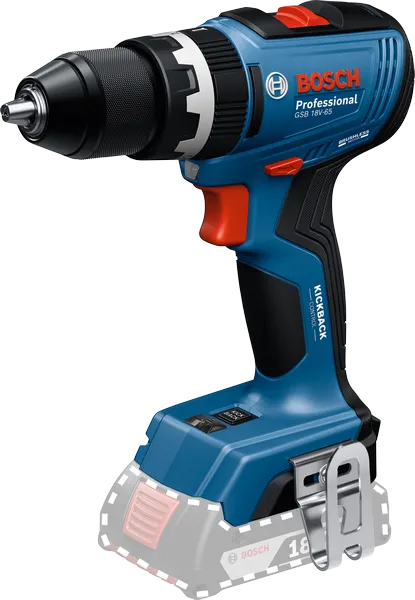
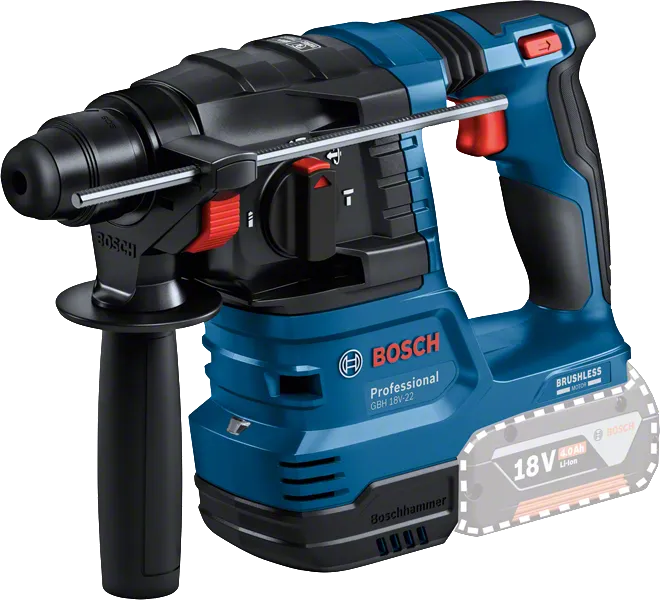
Model example | What it is best suited for | Key details |
|---|---|---|
GSB 18V-65 | Screwdriving plus drilling in wood, metal, and masonry | Bosch states up to 13 mm in masonry; weight without battery: 1.12 kg. |
GBH 18V-22 | Hammer drilling and chiseling in concrete and brick | Weight without battery: 2.3 kg. |
[url="https://www.bosch-professional.com/de/de/products/gsb-18v-65-06019N3300",name="View the GSB 18V-65 model and scope of delivery",title="This link leads to the Bosch Professional GSB 18V-65 product page"]
[url="https://www.bosch-professional.com/de/de/products/gbh-18v-22-0611924000",name="View the GBH 18V-22 model and scope of delivery",title="This link leads to the Bosch Professional GBH 18V-22 product page"]
Images: Bosch Professional. The batteries shown are not automatically included in the scope of delivery.
What matters more than the maximum number
A detail I find especially important is the optimal working range, not just the headline maximum. Bosch lists the GBH 18V-22 for 4–22 mm in concrete, but also states an optimal range of 4–12 mm.That distinction matters. If you regularly drill larger diameters, you should choose a model whose optimal range actually matches your work instead of being impressed by the highest possible figure on the box.
Buying tip: the best tool is the one that fits your common tasks, not the one with the most aggressive specification sheet.
What to check before buying
Bits and tool holders: cylindrical shank bits and SDS bits are different systems. Some GBH models, such as the GBH 2-26 F, offer an additional keyless chuck, but that does not apply to the entire GBH range.
Scope of delivery: compare bare tool and kit versions carefully. If you already own a battery, make sure it matches the exact tool and battery platform.
My practical recommendation
If you are furnishing a workshop from scratch, I would usually start with a cordless GSB because it covers the broader range of daily tasks. It can drive screws, drill in wood and metal, and handle occasional masonry work. On the other hand, if your project involves repeated drilling into reinforced concrete, wall anchors in hard material, or light demolition work, a GBH is not a luxury but the correct tool category.
That is why I would frame the choice like this: the GSB is the all-rounder, the GBH is the specialist. If you know which role matters more in your work, the buying decision becomes much clearer.
Sources:
[url="https://www.bosch-diy.com/de/de/all-about-diy/articles/der-richtige-bohrhammer-fuer-heimwerker",name="Bosch: Rotary hammer and impact drill – how they work",title="This link leads to Bosch DIY information about rotary hammers and impact drills"]
[url="https://www.bosch-professional.com/de/de/products/gsb-18v-65-06019N3300",name="Bosch GSB 18V-65: applications, weight and chuck",title="This link leads to the Bosch Professional GSB 18V-65 product page"]
[url="https://www.bosch-professional.com/de/de/products/gsb-24-2-060119C801",name="Bosch GSB 24-2: corded impact drill",title="This link leads to the Bosch Professional GSB 24-2 product page"]
[url="https://www.bosch-professional.com/de/de/products/gbh-18v-22-0611924000",name="Bosch GBH 18V-22: applications, weight and optimal concrete drilling range",title="This link leads to the Bosch Professional GBH 18V-22 product page"]
[url="https://www.bosch-professional.com/de/de/products/gbh-2-26-f-06112A4000",name="Bosch GBH 2-26 F: keyless chuck and chiseling mode",title="This link leads to the Bosch Professional GBH 2-26 F product page"]
Status: 21.10.2026. Research based on manufacturer documentation; no hands-on test of these exact models.

